 ©DipendraShrest
Case study · Design system
Paubha: one system, from Figma to production.
Visit site (opens in a new tab)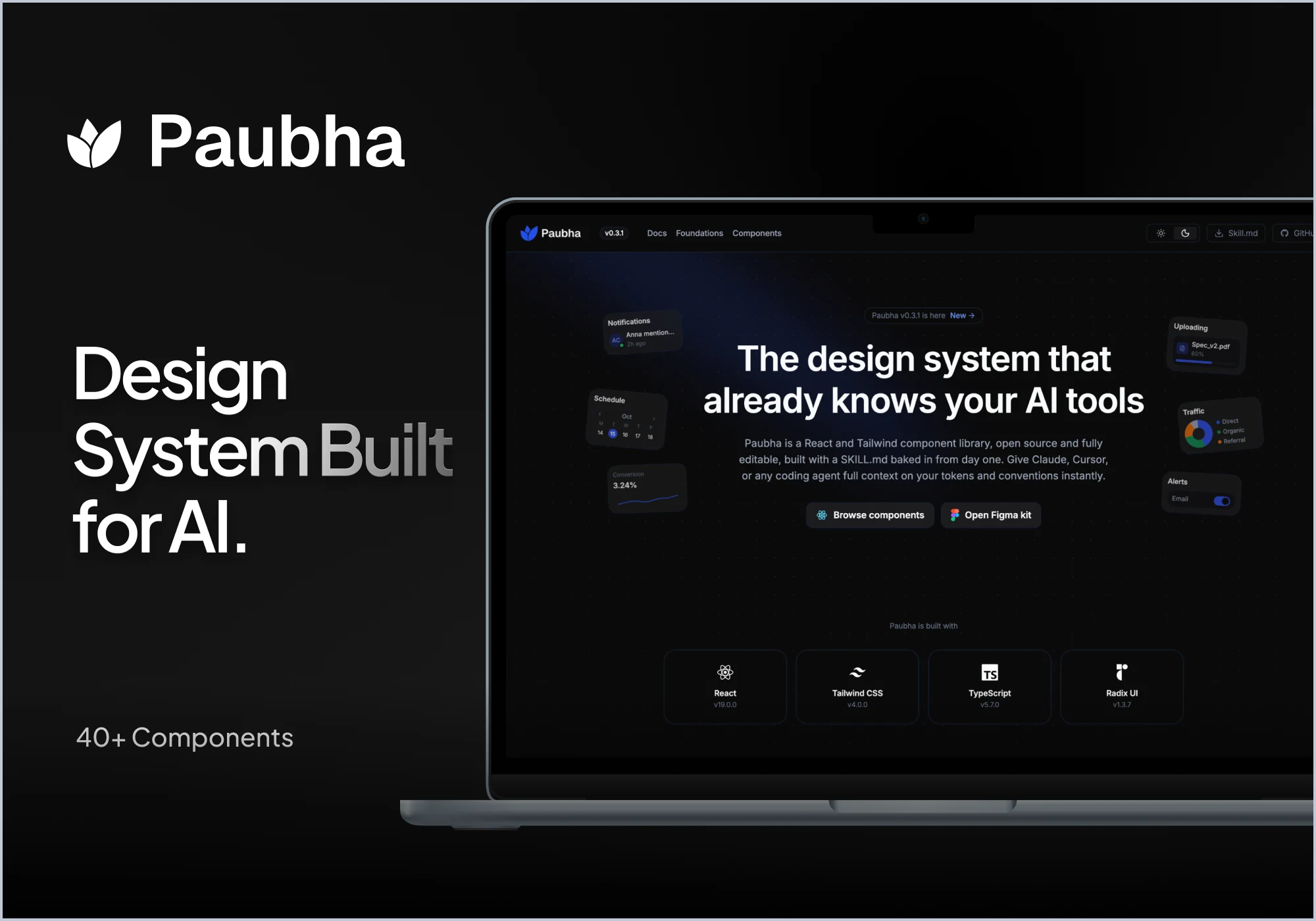
The challenge
Design systems usually live in two places. Designers work from a Figma file, engineers work from a code library, and over time the two drift apart. A colour gets updated in one and not the other. A button looks one way in the mockup and another in the product.
Paubha started with a simple question: what if there was only one source of truth?
The approach
I started with the foundations, not the components. Get the tokens right and everything built on top of them stays consistent.
- 01Every colour, space and radius is defined once, and named for what it does rather than how it looks.
- 02Figma and code use the exact same names, so designs hand off without translation.
- 03Light and dark themes are built into the tokens, so every component supports both by default.
- 04One sizing scale keeps buttons, inputs and selects aligned whenever they sit side by side.
- 05Every interactive element shares the same soft focus ring, so the whole system feels like one product.
- 06Components install with a single command and live in your codebase, so teams fully own them.
- 07Accessibility is built in, with keyboard support and screen reader labels on every component.
What changed
With Paubha, a button’s colour lives in one place: --bg-brand-solid. Change it once and every screen updates, in the design file and in the product.
Switching a whole product to dark mode, or to a new brand colour, becomes a token change instead of a redesign.
Outcomes
What shipped
- 33 core components, from buttons and inputs to menus, dialogs and tables
- Nearly 50 ready-made patterns for real screens: dashboards, settings, sign-in, pricing and more
- Light and dark themes built on one shared set of tokens
- A live documentation site and an open-source library anyone can install
What I learned
- Strong foundations make everything faster. New screens get assembled, not redrawn
- Small, repeated details, like one shared focus ring, are what make a system feel designed
- Examples matter as much as components. People learn a system by seeing it used
Built for
- Product teams who want design and code to stay aligned
- Developers who want accessible components they fully own
- Designers who want a Figma library that matches production
What’s next
Paubha is open source and still growing. Next up: a published Figma library, more real-world examples, and room for others to contribute.
“If design and code can disagree, eventually they will.”